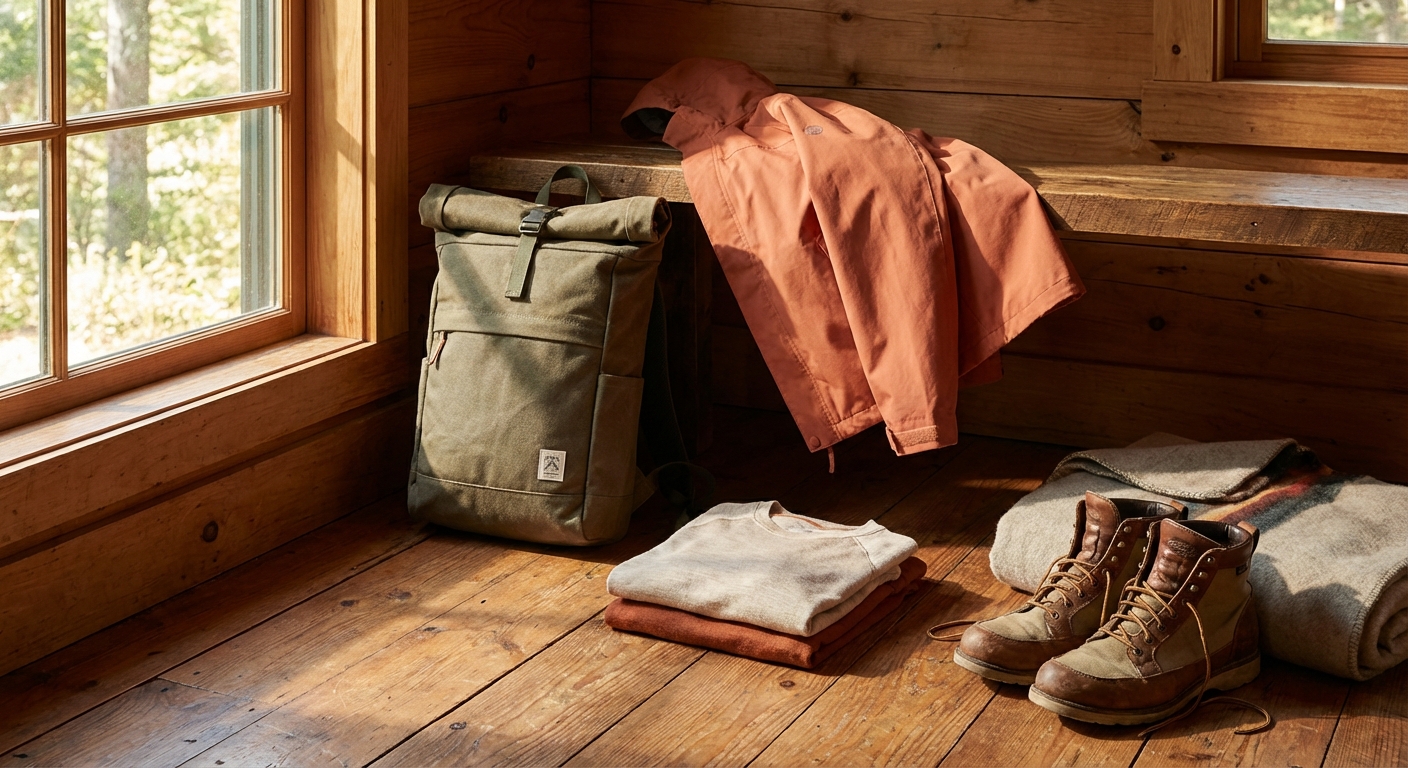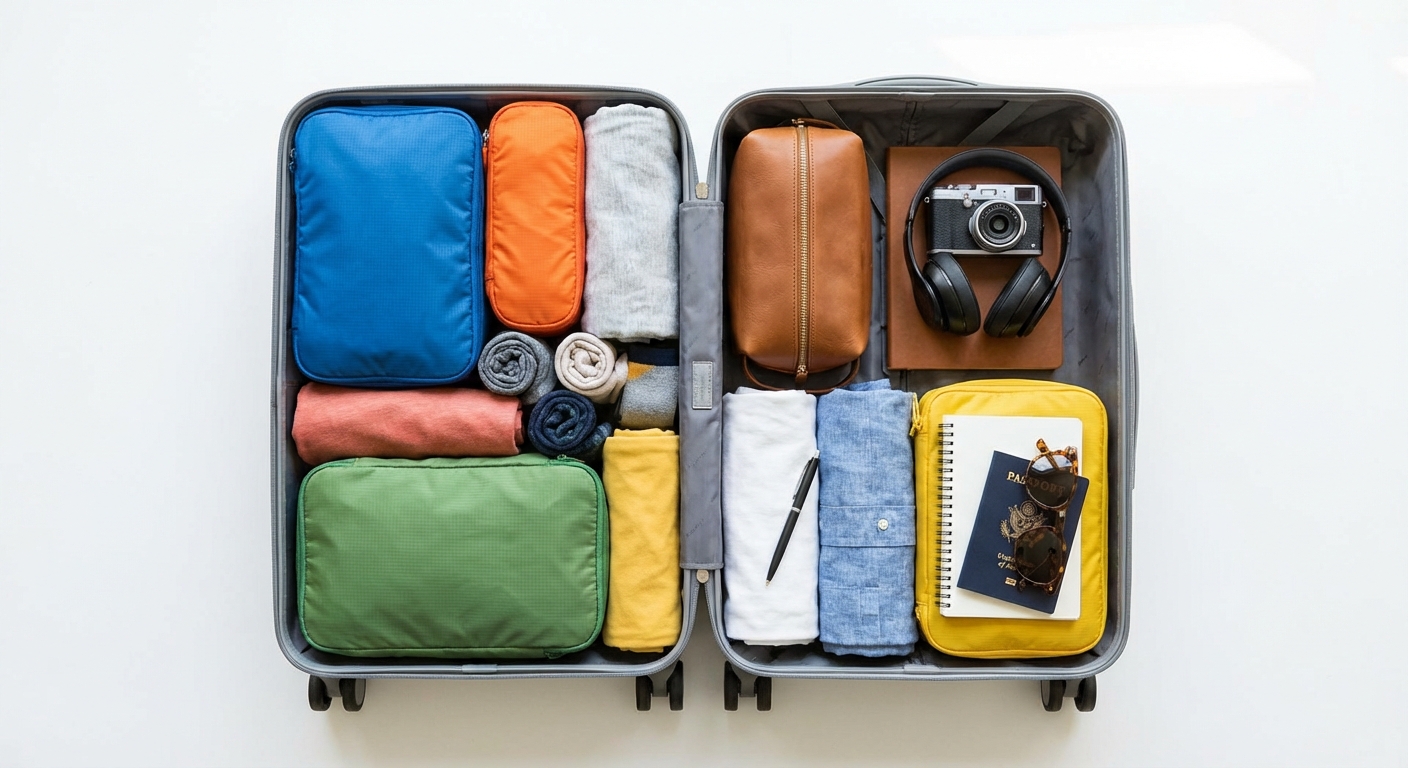
There is a certain satisfaction that comes with breezing past the baggage carousel while other travelers wait anxiously for their checked luggage. Mastering the art of carry-on packing is not about deprivation — it is about smarter choices, better organization, and a few clever techniques that let you bring everything you need in a single bag.
Whether you are heading out for a long weekend or a full two-week trip, this guide will show you how to pack efficiently, stay organized on the road, and take advantage of the latest packing innovations making travel easier in 2026.
Why Carry-On Only Travel Is Worth the Effort
Beyond the obvious time savings at the airport, traveling with only a carry-on offers real practical benefits that improve your entire trip experience.
Speed and flexibility are the biggest wins. You can move between trains, buses, and taxis without wrestling with oversized bags. Spontaneous changes to your itinerary become easy when you are not tethered to heavy luggage. Budget airlines that charge steep fees for checked bags become much more affordable when you only need a cabin bag.
Reduced stress is another major benefit. Lost luggage affects millions of travelers every year, and the rate of mishandled bags has been climbing as air travel volume increases. When everything you need is overhead or under the seat in front of you, that anxiety disappears entirely.
Environmental impact matters too. Lighter planes burn less fuel. While the individual contribution is small, the carry-on-only movement is part of a broader shift toward more mindful, lower-impact travel.
The Foundation: Choosing the Right Bag
Your bag is the single most important packing decision you will make. The right carry-on maximizes every cubic inch of space while meeting airline size requirements.
Dimensions matter. Most airlines allow carry-on bags up to 22 x 14 x 9 inches, but budget carriers often enforce stricter limits. Before buying a bag, check the size requirements for the airlines you fly most frequently. A bag that technically fits standard dimensions but has a rigid, boxy shape may still get flagged at the gate.
Soft-sided vs. hard-sided is a personal choice with real tradeoffs. Soft bags flex to fit into tight overhead bins and often have external pockets for quick access. Hard-shell bags protect fragile items better and are easier to clean, but they lack flexibility and expansion options.
Key features to look for:
- Compression straps inside the main compartment to cinch clothing down flat
- A dedicated laptop or tablet sleeve that is easy to access during security screening
- Water-resistant exterior to protect your belongings during unexpected rain or outdoor transfers
- Smooth-rolling wheels and a telescoping handle if you prefer a roller, or padded shoulder straps if you go the backpack route
- USB-C pass-through ports — many modern travel bags now route power from an internal battery pack to external charging ports, letting you charge devices without opening the bag
Packing Cubes: The Game-Changer You Cannot Skip
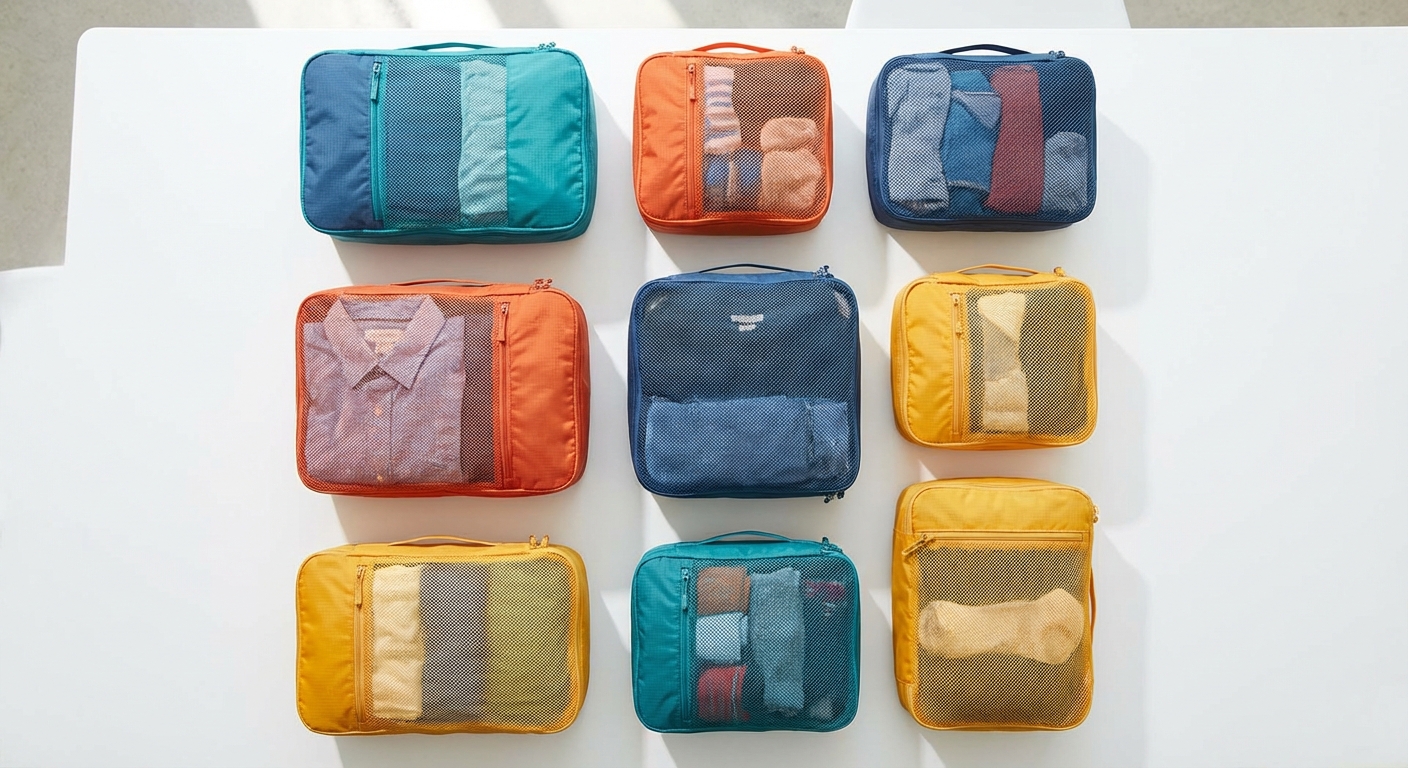
If you take one piece of advice from this entire guide, let it be this: use packing cubes. These lightweight fabric organizers are the single most effective tool for maximizing space and staying organized.
Packing cubes work by compressing your clothing into neat, stackable rectangles that eliminate dead space inside your bag. A well-cubed carry-on can hold 20 to 30 percent more than the same bag packed loosely.
Compression packing cubes take this further. They feature a second zipper that squeezes air out of the cube after packing, reducing volume even more. These are especially valuable for bulky items like sweaters, jackets, and jeans.
How to organize your cubes:
- One cube for tops — shirts, blouses, base layers
- One cube for bottoms — pants, shorts, skirts
- One cube for undergarments and socks — small items that would otherwise scatter
- One flat cube or folder for items that wrinkle easily — dress shirts, blazers
- A separate pouch for dirty laundry — keeps worn clothes isolated
Color-coded cubes make it even easier to find what you need without unpacking everything. Some travelers assign colors by outfit or by day.
The Capsule Wardrobe Approach: Less Clothing, More Outfits
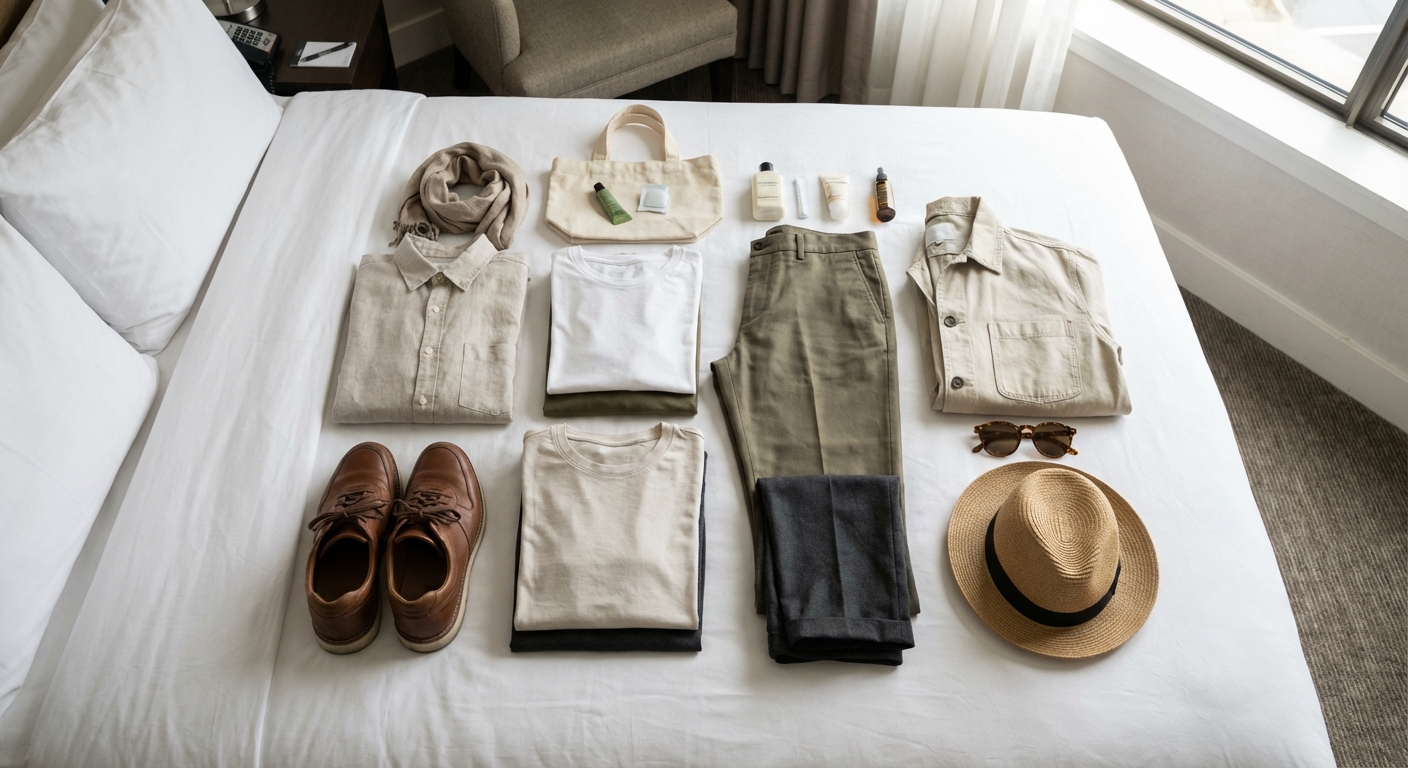
The secret to packing light is not bringing fewer clothes — it is bringing the right clothes. A capsule wardrobe built around mix-and-match pieces gives you maximum outfit variety from minimum items.
Start with a color palette. Choose two or three neutral base colors (black, navy, gray, khaki) and one or two accent colors. Every piece you pack should coordinate with at least two others.
A sample capsule for a one-week trip:
- 3 tops (mix of casual and slightly dressy)
- 2 bottoms (one pant, one short or skirt depending on climate)
- 1 light outer layer (jacket, cardigan, or hoodie)
- 1 versatile dress or button-down for dressier occasions
- 5 sets of undergarments and socks
- 1 pair of walking shoes (worn on the plane)
- 1 pair of sandals or lightweight dress shoes (packed)
- 1 swimsuit if needed
This gives you well over a dozen distinct outfits from roughly ten items. The key is choosing fabrics that resist wrinkles, dry quickly, and layer well. Merino wool, performance synthetics, and wrinkle-free cotton blends are your best friends.
Tech and Toiletries: Packing the Essentials Without the Bulk
Electronics and toiletries are where many travelers blow their space budget. A disciplined approach here can save significant room.
Tech essentials:
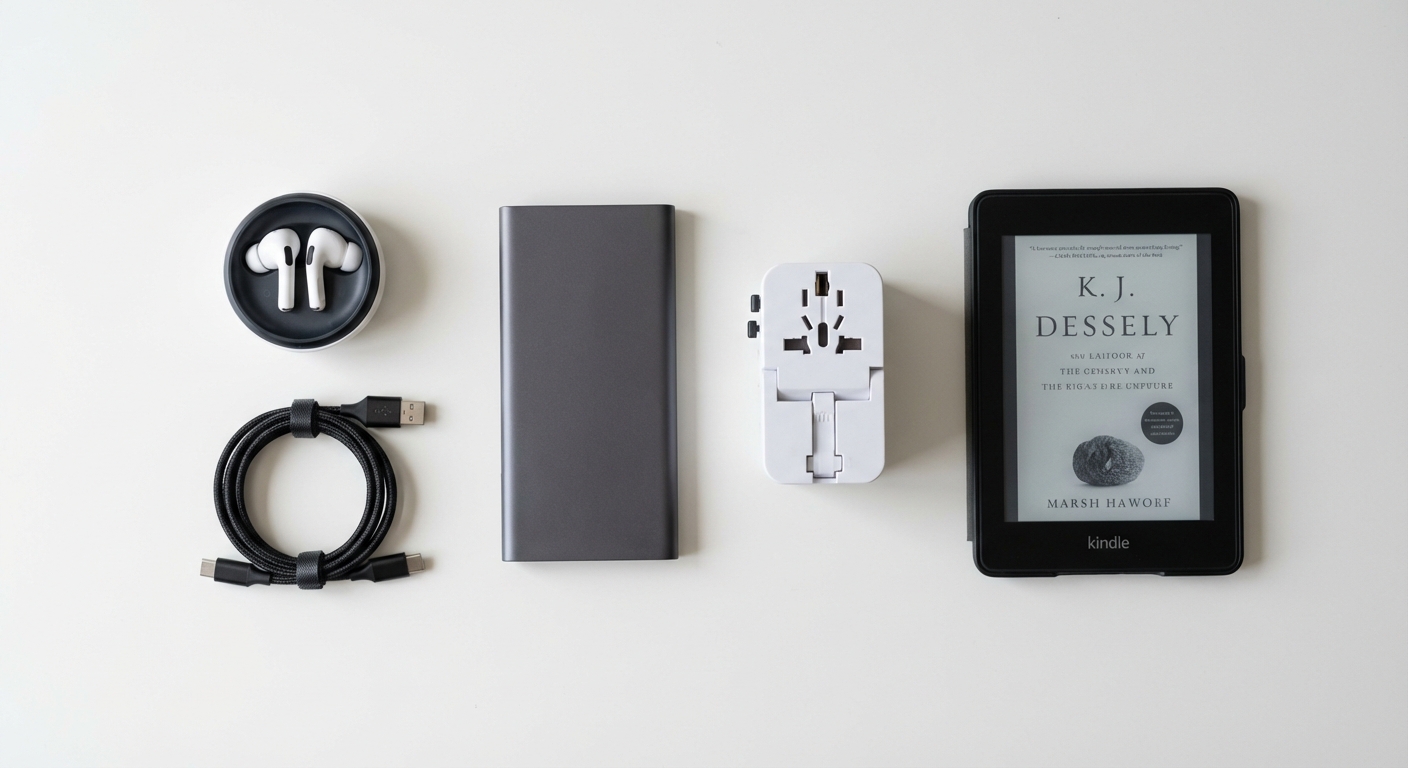
- One universal power adapter instead of multiple country-specific ones
- A single multi-port charger that can power your phone, tablet, and earbuds simultaneously — the move to USB-C across devices in 2026 means fewer cables overall
- A compact power bank in the 10,000 mAh range — enough for two to three full phone charges without adding much weight
- Noise-canceling earbuds rather than over-ear headphones to save space
- A lightweight e-reader instead of physical books
Toiletry tips:
- Decant products into small silicone travel bottles rather than bringing full-size containers
- Solid alternatives — shampoo bars, solid deodorant, bar soap — eliminate liquid restrictions entirely and take up less space
- A hanging toiletry bag keeps everything organized and hangs in cramped bathrooms where counter space is limited
- Skip what your accommodation provides — most hotels and hostels supply basic soap, shampoo, and conditioner
Advanced Packing Techniques
Once you have the right gear and a curated wardrobe, these techniques squeeze out the last bit of efficiency.
The bundle wrap method involves wrapping clothing items around a central core (like your toiletry bag) in alternating layers. This minimizes creases and creates a single compact bundle that uses space efficiently.
Wear your bulkiest items on the plane. Your heaviest jacket, chunkiest shoes, and thickest pants should be on your body, not in your bag. Some travelers even wear a lightweight packable vest with extra pockets to carry overflow items through security.
Use dead space creatively. Stuff socks and underwear inside shoes. Tuck small items like chargers and adapters into gaps between packing cubes. Roll belts along the inside perimeter of your bag.
Layer strategically. Heavy, flat items go at the bottom (near the wheels on a roller bag). Packing cubes stack in the middle. Items you need during the flight — headphones, snacks, a book, your passport — go on top or in an accessible pocket.
Staying Organized on the Road
Packing well is only half the battle. Staying organized throughout your trip keeps the system working.
Unpack immediately when you arrive at your accommodation. Hanging clothes and placing cubes in drawers prevents the dreaded "explosion suitcase" effect and lets your clothes air out.
Do laundry on longer trips. A small packet of travel detergent and a portable clothesline let you wash lightweight items in a sink and dry them overnight. This is how experienced travelers stretch a one-week wardrobe into a month-long trip.
Keep a dedicated "transit pouch" with your passport, boarding pass, pen, earplugs, and a snack. Having these items in one consistent location means you never have to dig through your bag at security or customs.
Carry-on packing is a skill, and like any skill, it improves with practice. Start with your next trip, experiment with what works, and refine your system over time. Once you experience the freedom of traveling light, you will never want to check a bag again.