Energy costs keep climbing, but your home is probably wasting more power than you realize. Studies consistently show that the average household wastes 20 to 35 percent of its energy through inefficiencies — lights left on in empty rooms, heating and cooling systems running when nobody is home, and appliances drawing phantom power around the clock.
The good news is that smart energy monitoring technology has matured significantly in 2026. What used to require expensive professional installations and complicated dashboards has become accessible, affordable, and genuinely easy to use. Here is how to take control of your energy consumption.
Understanding Where Your Energy Actually Goes
Before you can reduce energy waste, you need to understand where it is happening. Most people have only a vague sense of their energy usage — the monthly bill arrives, you wince, and life goes on.
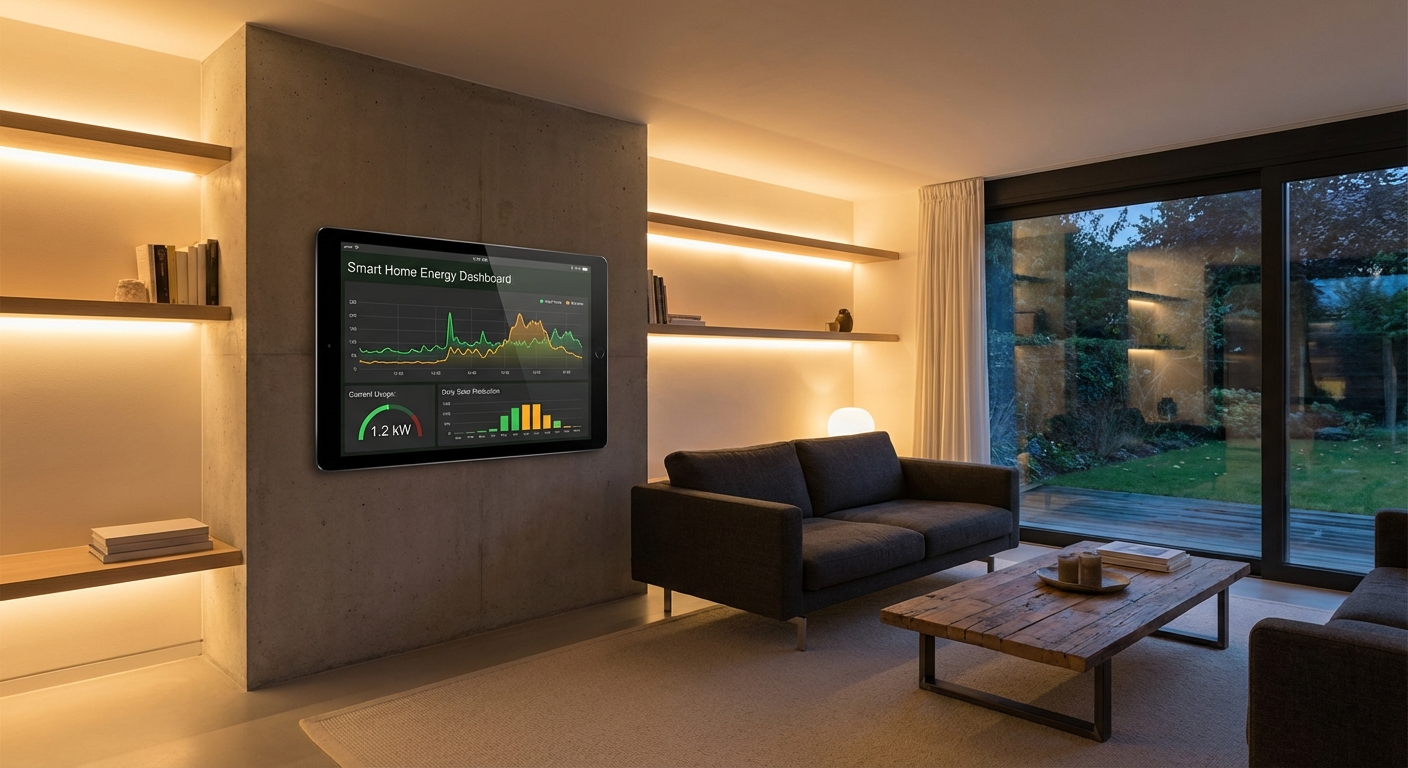
Smart energy monitors change this by giving you real-time, granular visibility into your consumption. Modern whole-home energy monitors clamp onto your electrical panel and can identify individual appliances by their unique electrical signatures — no smart plugs required on every outlet.
Common surprises people discover when they start monitoring:
- Phantom loads — Devices in standby mode collectively draw 5 to 10 percent of a typical home's electricity. Entertainment centers, gaming consoles, and chargers left plugged in are major culprits
- HVAC dominance — Heating and cooling typically accounts for 40 to 50 percent of energy use, and much of it runs when optimizing the schedule could reduce it substantially
- Hot water waste — Water heating is the second largest energy expense in most homes, and traditional tank heaters keep water hot 24 hours a day whether you need it or not
- Lighting inefficiency — Homes that have not switched to LED lighting spend three to five times more on lighting than necessary
Building a Smart Energy System Step by Step
You do not need to overhaul your entire home at once. A phased approach lets you see results quickly while spreading out costs.
Phase 1: Monitor and Learn
Start with a whole-home energy monitor. These devices install at your electrical panel and connect to your home Wi-Fi, providing a real-time dashboard on your phone showing exactly how much electricity you are using at any moment.
The first week is eye-opening. You will start noticing patterns — the spike when your dryer runs, the steady draw from your water heater cycling on and off, the baseline consumption that never drops to zero even when you are asleep.
Spend at least two weeks just observing before making changes. The data will show you exactly where to focus your efforts for maximum impact.
Phase 2: Automate the Easy Wins
Once you understand your consumption patterns, start with the changes that require the least effort and investment:

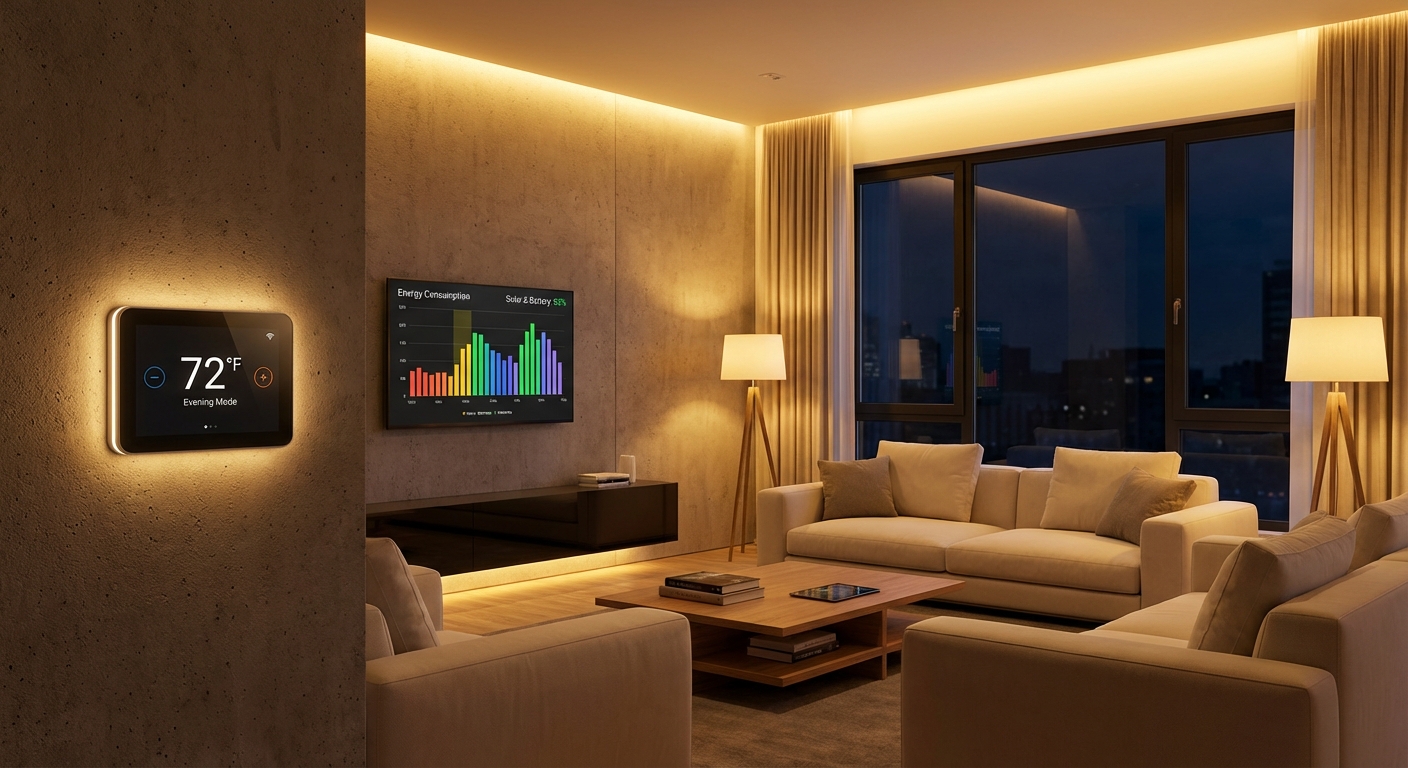
Smart thermostats are the single most impactful upgrade for most homes. Modern smart thermostats go beyond simple scheduling — they use occupancy sensors, weather forecasts, and learned preferences to optimize heating and cooling automatically. Many can reduce HVAC energy use by 15 to 25 percent with minimal effort on your part.
Key features to look for:
- Occupancy detection — Automatically adjusts when nobody is home
- Learning capability — Adapts to your schedule over time without manual programming
- Weather integration — Pre-heats or pre-cools based on forecast changes
- Zone control — If your system supports it, only conditions the rooms you are actually using
Smart plugs and power strips let you control and schedule devices that draw phantom power. Put your entertainment center on a smart power strip that cuts power completely when the main device turns off. Schedule chargers to turn off after a set time.
Smart lighting with occupancy sensors ensures lights are never left on in empty rooms. Motion-activated lighting in hallways, bathrooms, and closets eliminates the "forgot to turn it off" problem entirely.
Phase 3: Optimize Your Major Systems
With monitoring data and basic automation in place, you can tackle the bigger efficiency projects:
Water heating optimization — Smart water heater controllers can learn your hot water usage patterns and only heat water when you actually need it. If you take showers in the morning and evening, there is no reason to keep a tank of water hot at 3 AM.
Window and door sensors — These alert your smart thermostat when windows are open, preventing the system from heating or cooling air that is escaping outside. A simple integration that prevents surprisingly wasteful scenarios.
Appliance scheduling — Running your dishwasher, washing machine, and dryer during off-peak electricity hours can reduce costs significantly if your utility offers time-of-use pricing. Smart plugs can automate this timing.
The Role of AI in Home Energy Management
The most significant development in 2026 is AI-driven energy management that goes beyond simple automation. Modern smart home energy systems can now:
- Predict your needs — Based on your historical patterns, weather forecasts, and calendar events, the system anticipates when you will need heating, cooling, or hot water and prepares in advance
- Optimize across systems — Instead of each device operating independently, AI coordinates your thermostat, water heater, lighting, and appliances as a unified system
- Detect anomalies — Sudden changes in consumption patterns can indicate a failing appliance, a water leak, or an HVAC system that needs maintenance — often before you would notice a problem
- Adapt to rate changes — If your utility uses variable pricing, AI systems automatically shift flexible loads to the cheapest times
Solar and Battery Integration
For homeowners with solar panels or considering them, smart energy monitoring becomes even more valuable. Modern systems track both generation and consumption, helping you understand:
- How much solar energy you use directly versus exporting to the grid
- The optimal times to run heavy appliances to maximize solar self-consumption
- Whether a battery storage system makes financial sense based on your actual usage patterns
- How your energy independence changes seasonally
Even without solar panels, home battery systems are becoming practical for homes with time-of-use electricity pricing — storing cheap overnight power and using it during expensive peak hours.
Practical Tips for Immediate Savings
While you build out your smart energy system, these no-cost and low-cost changes can start reducing bills immediately:
- Adjust your thermostat by two degrees — Two degrees warmer in summer and two degrees cooler in winter typically saves 5 to 10 percent on HVAC costs with minimal comfort impact
- Unplug unused chargers — Phone chargers, laptop chargers, and power adapters draw power even when not connected to a device
- Use cold water for laundry — Modern detergents work effectively in cold water, and heating water accounts for about 90 percent of the energy a washing machine uses
- Clean or replace HVAC filters monthly — A dirty filter forces your system to work harder, increasing energy consumption by 5 to 15 percent
- Seal air leaks — A tube of caulk and some weatherstripping can eliminate drafts that force your HVAC system to work overtime
Measuring Your Progress
The beauty of smart energy monitoring is that you can measure the impact of every change you make. After each upgrade or habit change, your monitoring system shows exactly how much energy — and money — you are saving.
Set monthly benchmarks and track your progress. Most smart energy platforms provide month-over-month and year-over-year comparisons that make it easy to see your trajectory.
The typical household that implements a comprehensive smart energy approach — monitoring, smart thermostat, automated lighting, and phantom load management — sees a 25 to 35 percent reduction in energy costs within the first three months. That is real money back in your pocket, every single month.