Why Spring Cleaning Looks Completely Different in 2026
Spring cleaning used to mean a weekend of scrubbing, sorting, and suffering. You would pull out the mop bucket, dig through closets, and collapse on the couch by Sunday evening wondering if the whole exercise was worth it.
That is changing. A new generation of smart cleaning devices, eco-friendly products, and app-based organization tools has turned spring cleaning from a dreaded annual chore into something closer to a system you maintain year-round. The result is less effort, better results, and a home that stays cleaner between deep cleans.
Here is what a modern spring cleaning routine actually looks like, and which technologies are worth integrating into yours.
Robot Vacuums and Mops Have Finally Grown Up
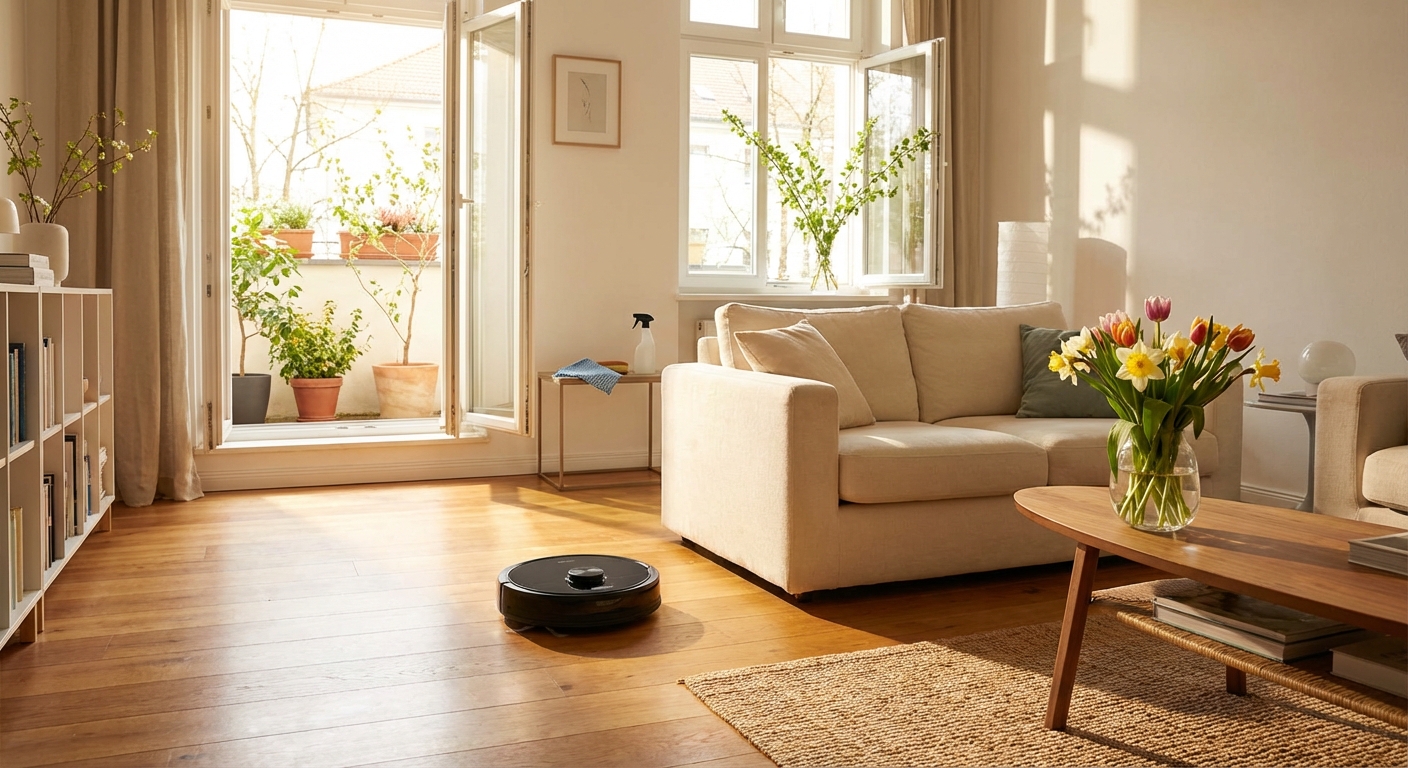
Robot vacuums have been around for years, but the current generation is a different animal entirely. Modern robots map your home with precision, avoid obstacles intelligently, and can vacuum and mop in a single pass.
What has changed recently:
- Room-specific cleaning — Current robots know the difference between your kitchen, living room, and bedroom. You can tell them to mop only the kitchen or vacuum only the bedrooms, either through the app or with a voice command
- Self-emptying and self-washing — Many mid-range and premium robots now return to a base station that empties the dustbin and washes the mop pads automatically. This means weeks can go by without you touching the device
- Obstacle avoidance — Advanced camera and sensor systems let robots navigate around shoes, cables, pet toys, and other floor clutter without getting stuck
- Multi-floor mapping — If you live in a multi-story home, the latest robots can store separate maps for each floor and adapt automatically when you move them between levels
For spring cleaning specifically, robot vacuums are ideal for maintaining the deep-cleaned state you achieve during your annual reset. Run them daily or every other day, and you will find that dust and pet hair never have a chance to accumulate.
Eco-Friendly Cleaning Products Are Now the Default
One of the most significant shifts in home cleaning is the mainstream adoption of plant-based, non-toxic cleaning products. What was once a niche category found only in health food stores is now the standard on most store shelves.
Why this matters for spring cleaning:
- Fewer harsh chemicals in your home — Traditional cleaning products often contain volatile organic compounds that linger in the air for hours. During spring cleaning, when you are using products intensively, switching to plant-based alternatives meaningfully improves indoor air quality
- Concentrated formulas reduce waste — Many eco-friendly brands now sell concentrated tablets or refill pouches that you mix with water at home. This eliminates single-use plastic spray bottles and reduces shipping weight
- They actually work — The early reputation of green cleaners as ineffective is outdated. Current formulations perform on par with conventional products for most household cleaning tasks
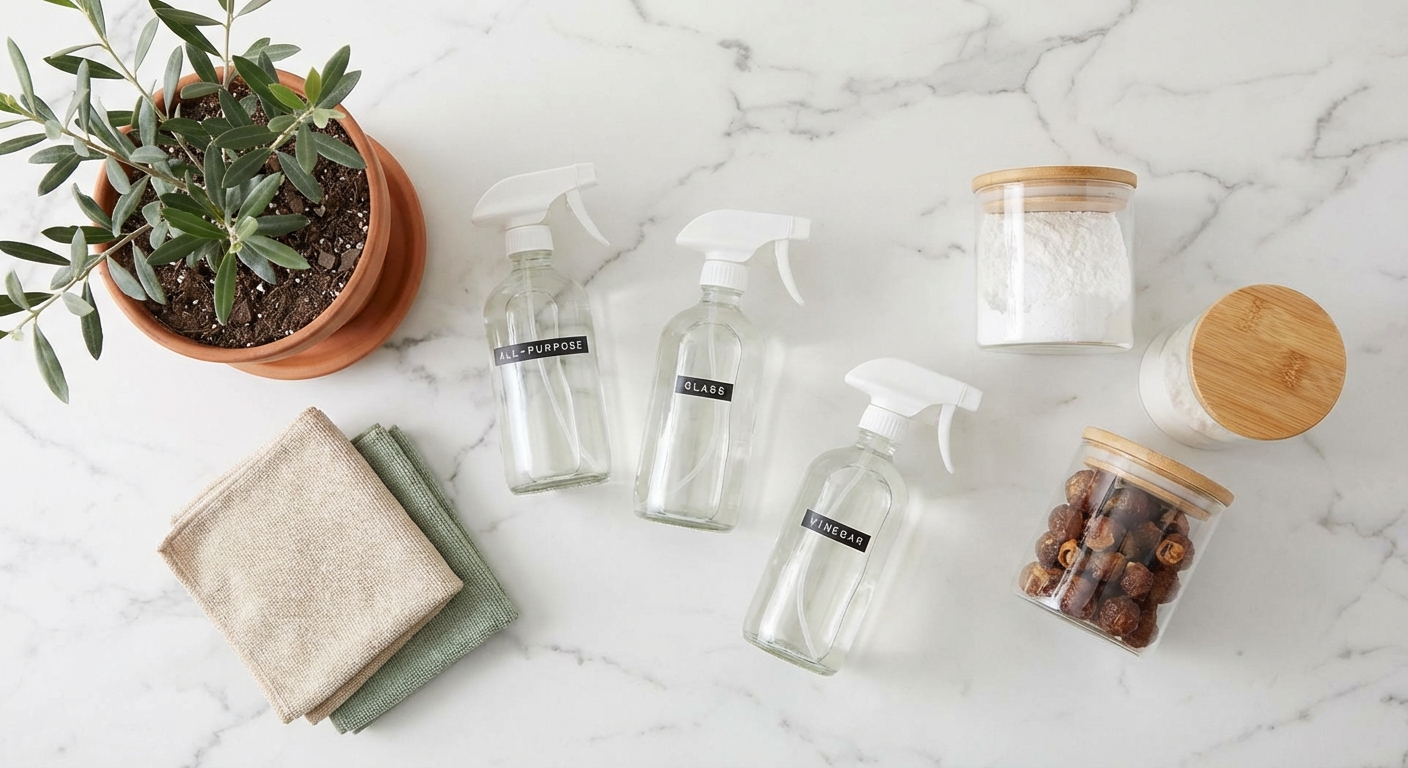
A practical spring cleaning starter kit:
- An all-purpose plant-based concentrate for countertops, sinks, and general surfaces
- A dedicated bathroom cleaner with natural descaling agents for soap scum and hard water
- Microfiber cloths (reusable, machine washable, and more effective than paper towels)
- A glass cleaner for windows and mirrors
- A floor concentrate compatible with your flooring type
App-Controlled Cleaning Schedules
The unsung hero of modern spring cleaning is the cleaning schedule. Several apps now let you create room-by-room cleaning plans, set reminders, and track what has been done.
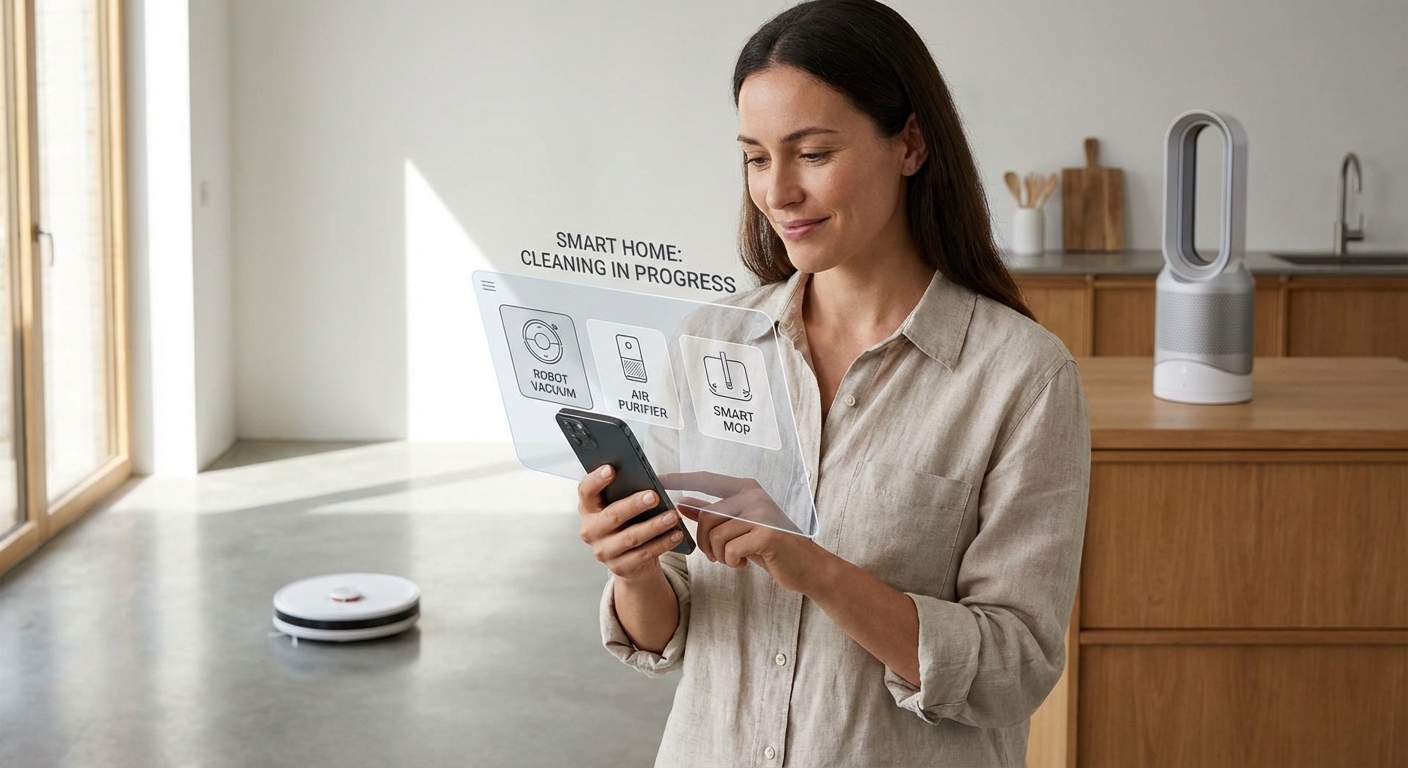
How to set up a smart cleaning rotation:
- Break your home into zones — Instead of trying to clean everything at once, assign each zone a day of the week. Kitchen on Monday, bathrooms on Wednesday, bedrooms on Friday, and so on
- Set device schedules — Program your robot vacuum to run in specific rooms on specific days. Most companion apps make this easy with drag-and-drop scheduling
- Use reminders for seasonal tasks — Things like cleaning behind the refrigerator, washing curtains, or deep-cleaning the oven only need to happen a few times a year. Set calendar reminders so they do not slip through the cracks
- Track consumables — Some smart home platforms can remind you when it is time to replace vacuum filters, mop pads, or cleaning solution refills
The goal is not to automate everything but to create a rhythm that prevents the need for an exhausting annual deep clean. When cleaning happens in small, regular increments, spring cleaning becomes more of a tune-up than an overhaul.
The Decluttering Component
No spring cleaning guide is complete without addressing the clutter itself. Technology can help here too, though the real work is still fundamentally about making decisions.
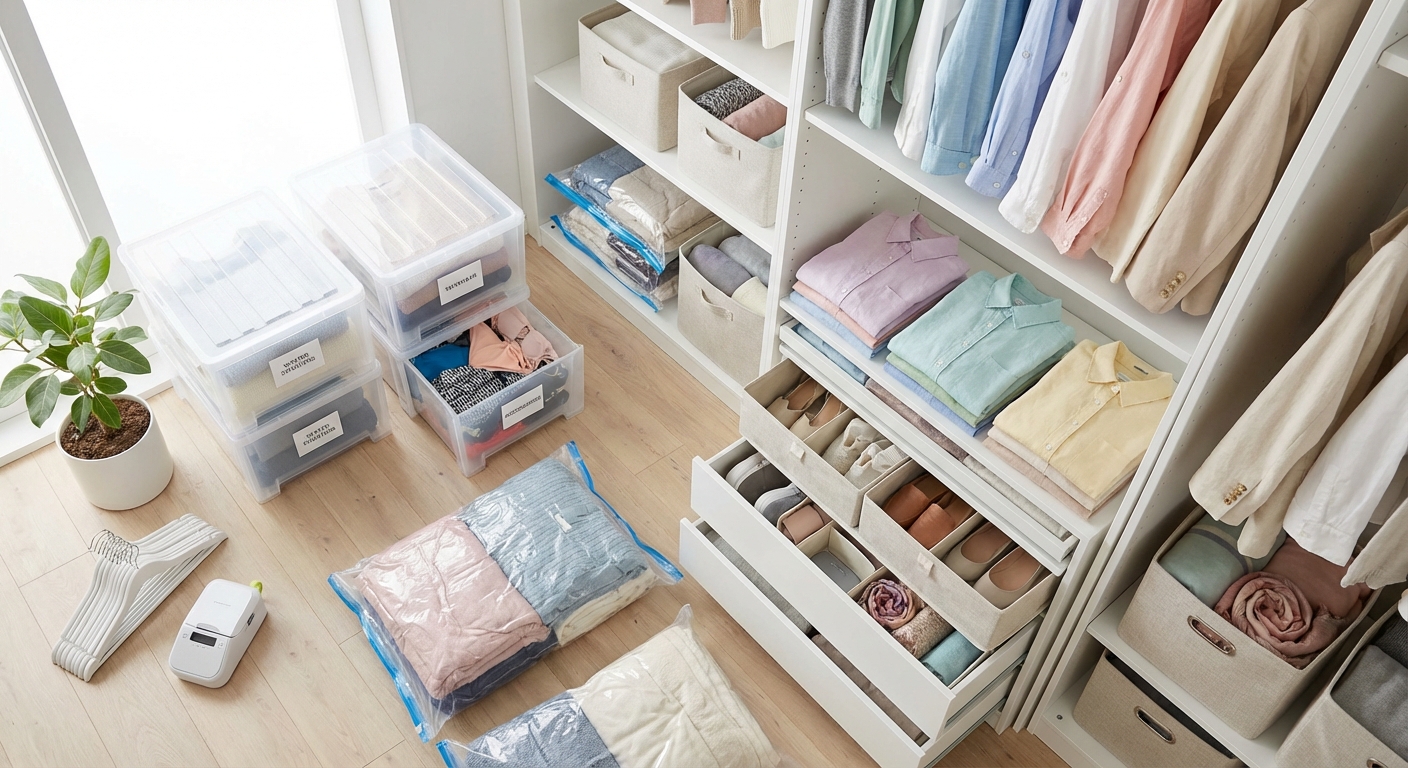
A practical decluttering framework for spring:
- Start with the easiest wins — Expired pantry items, old magazines, broken electronics, and clothes that no longer fit are all quick decisions. Clear these first to build momentum
- Use the one-year rule thoughtfully — If you have not used something in a year, you probably do not need it. But apply context: seasonal items, tools for specific projects, and sentimental objects deserve more nuance
- Digitize paper — Use your phone's camera or a scanning app to digitize receipts, manuals, and documents you need to keep but do not need in physical form. This alone can free up surprising amounts of storage space
- Sell, donate, or recycle — do not just relocate — Moving clutter from one room to another is not decluttering. Make a clear decision for each item: keep it in an organized spot, sell it, donate it, or recycle it
- Set up maintenance systems — A small bin by the door for items to donate, a clear inbox for paper that needs processing, and a regular schedule for reviewing what comes into the house all prevent re-accumulation
Air Quality: The Hidden Spring Cleaning Priority
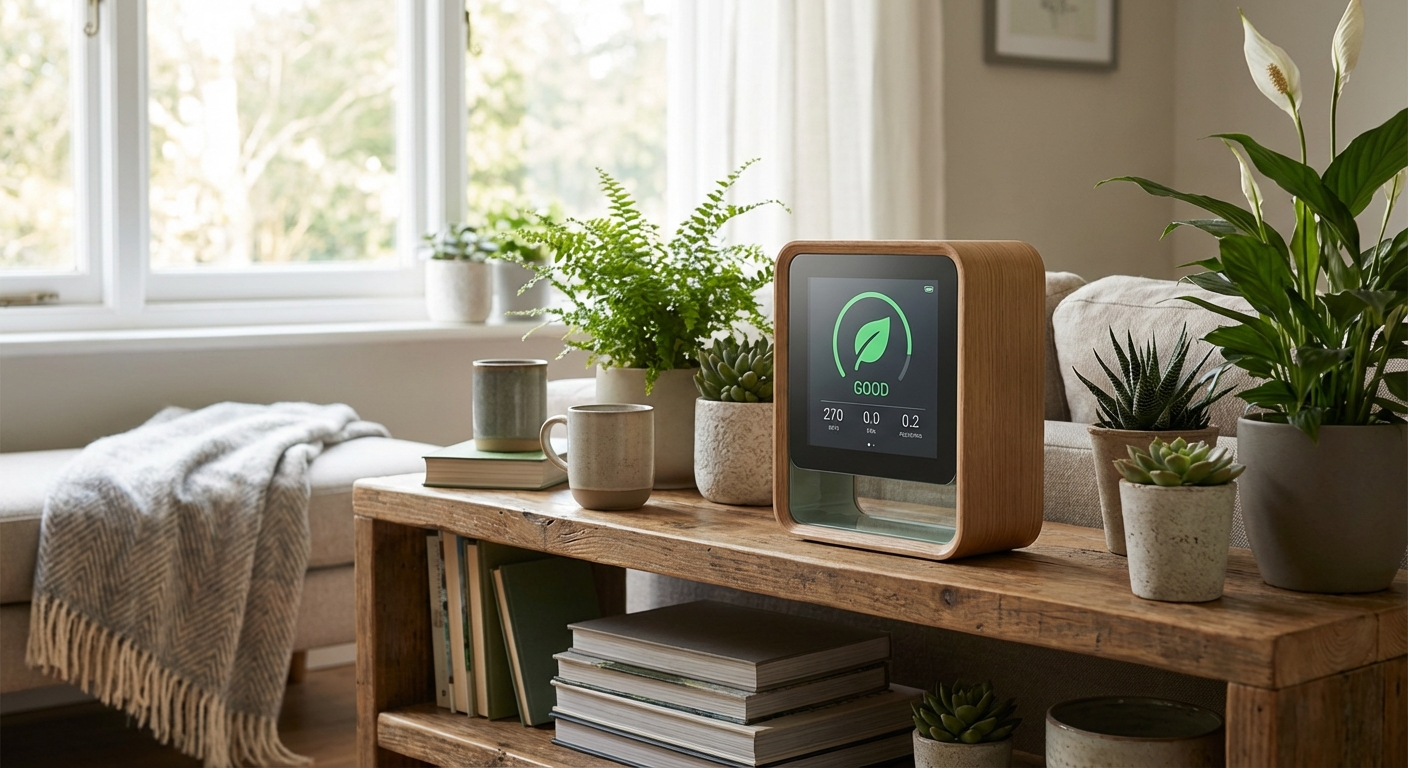
Most people focus on visible cleaning during spring — surfaces, floors, and organization. But indoor air quality is arguably more important for your health and is often overlooked.
Quick wins for better air during spring cleaning:
- Open windows strategically — Spring is the ideal time to air out your home after a sealed-up winter. Open windows on opposite sides of the house for fifteen minutes to create cross-ventilation
- Replace HVAC filters — If you have not changed your furnace or AC filters since fall, now is the time. Dirty filters recirculate dust and allergens instead of trapping them
- Clean ceiling fan blades — These collect enormous amounts of dust over winter and then spread it around the room the first time you turn them on in spring
- Consider an air purifier for allergy season — If you suffer from spring allergies, a quality air purifier in your bedroom can significantly improve sleep quality during peak pollen season
- Vacuum soft furnishings — Couches, curtains, and mattresses all trap dust, pet dander, and allergens. Use an upholstery attachment to vacuum these surfaces during your spring cleaning routine
Building a Year-Round System
The ultimate goal of smart spring cleaning is to make the annual deep clean unnecessary — or at least much less painful. Here is how to transition from a once-a-year marathon to a sustainable routine:
Daily (automated): Robot vacuum runs on schedule. Dishes and countertops cleared after meals.
Weekly (fifteen minutes per zone): One room gets a focused clean each day — wipe surfaces, clean mirrors, mop hard floors, change linens.
Monthly (thirty minutes): Deep clean one area — inside the oven, behind furniture, bathroom grout, window tracks.
Seasonally (one to two hours): The big stuff — wash windows inside and out, clean gutters, rotate mattresses, declutter one major area.
When cleaning is distributed across small regular sessions rather than concentrated into one overwhelming weekend, it stops feeling like a chore and starts feeling like maintenance. And that is the real revolution in how we clean our homes — not any single device, but the shift from reactive cleaning to proactive systems.