If you have ever come home to a shredded couch cushion, a neighbor complaint about barking, or a cat that has knocked everything off the counter in protest, you know what separation anxiety looks like from the outside. From your pet's perspective, though, it is genuinely distressing, and it is one of the most common behavioral issues pet owners face.
The good news is that 2026 has brought a range of smart tools and updated behavioral strategies that can meaningfully reduce separation anxiety in both dogs and cats. Here is what actually works, what is overhyped, and how to build a calming routine that fits your life and your pet's temperament.
Understanding What Separation Anxiety Actually Is
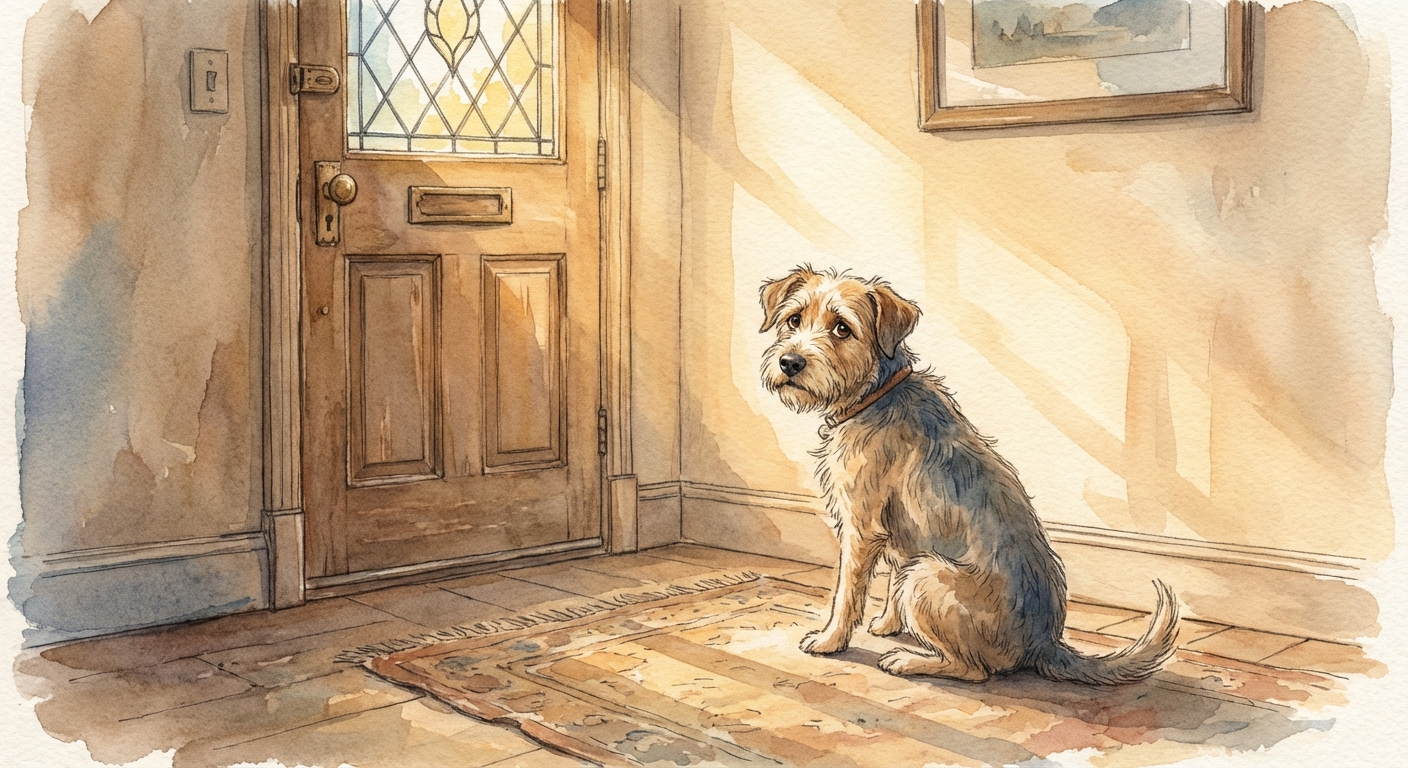
Separation anxiety is more than just a pet missing you. It is a stress response triggered by the absence of their primary attachment figure. In dogs, the signs are usually obvious: destructive chewing, excessive barking or howling, pacing, house soiling despite being trained, and sometimes attempts to escape. In cats, the signs can be subtler: over-grooming, changes in appetite, excessive vocalization, or eliminating outside the litter box.
Not every pet that acts out when alone has true separation anxiety. Some dogs are simply bored, under-exercised, or have not been properly crate trained. Cats may be reacting to environmental changes rather than your absence. Understanding the root cause is the first step toward choosing the right solution.
Smart Cameras and Two-Way Communication
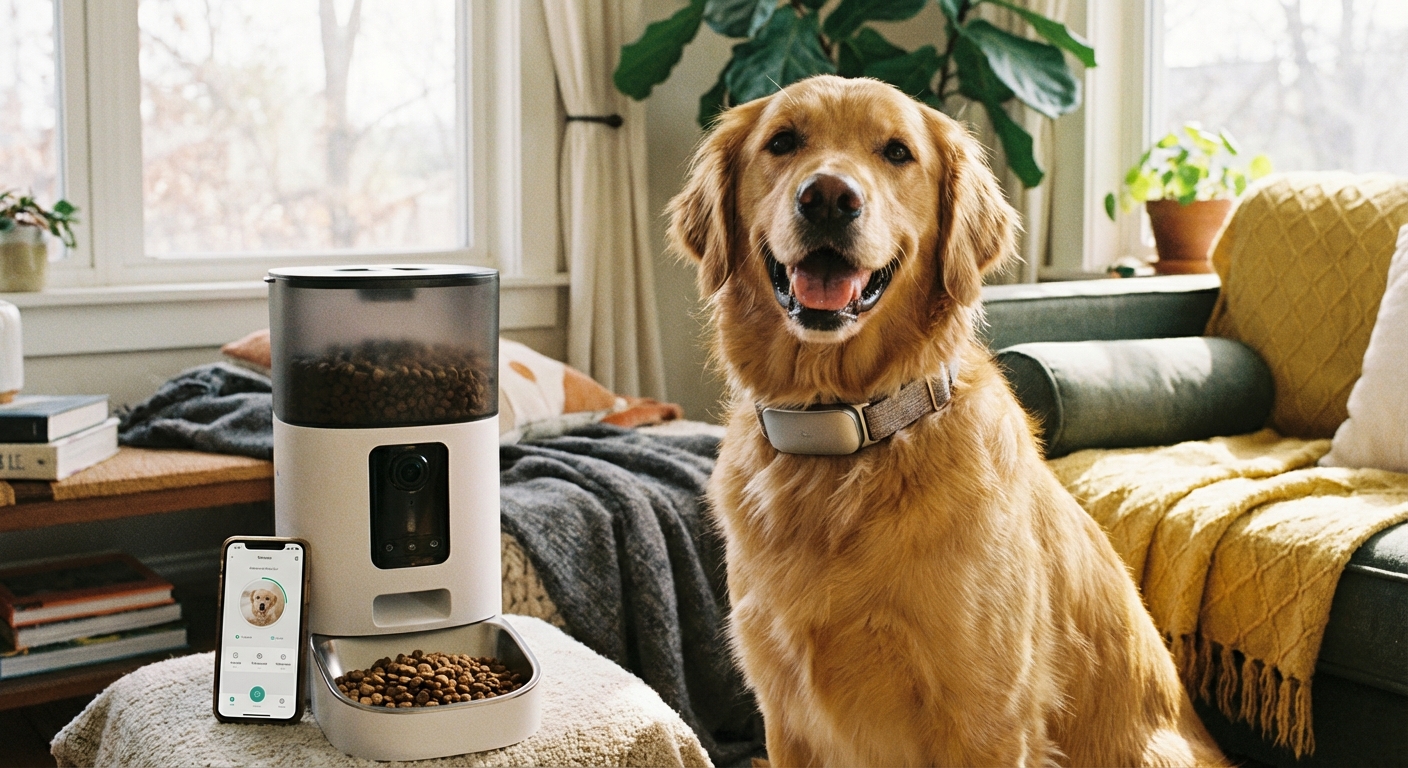
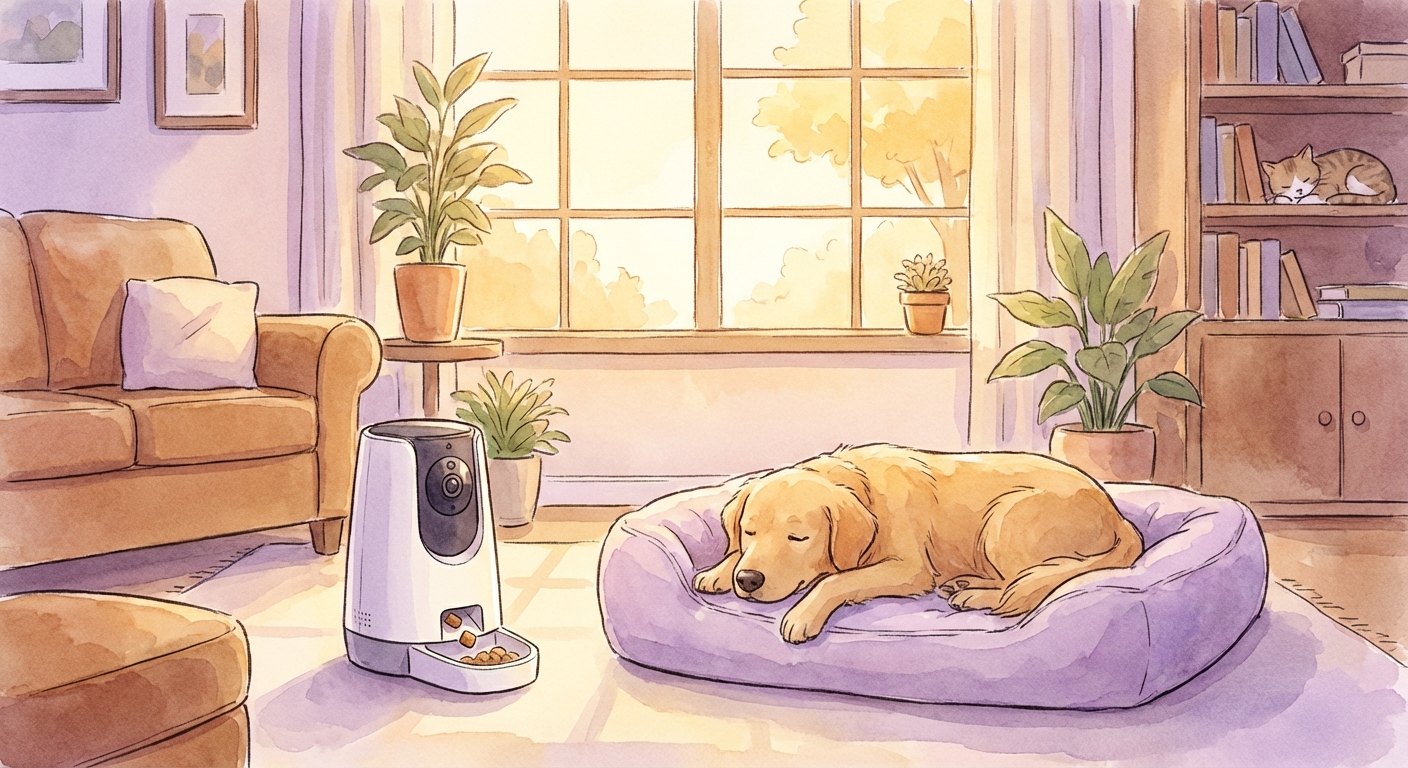
Pet cameras with two-way audio have evolved significantly. Current models offer high-definition video, night vision, motion alerts, and the ability to speak to your pet from your phone. Some also include treat dispensers that let you reward calm behavior remotely.
How they help: Being able to check in on your pet throughout the day serves two purposes. First, it gives you data. You can see exactly when anxiety spikes, whether it happens the moment you leave or builds gradually, and what triggers it. Second, some pets genuinely respond to hearing their owner's voice, especially in the early stages of separation training.
What to watch for: For some highly anxious pets, hearing your voice without seeing you in person can actually increase confusion and stress. Monitor your pet's reaction carefully when you first use two-way audio. If they become more agitated, switch to passive monitoring only.
Interactive Toys and Puzzle Feeders
Mental stimulation is one of the most effective tools for managing mild to moderate separation anxiety. When your pet's brain is engaged in solving a puzzle or working for a treat, they have less bandwidth for anxious behavior.
For dogs: Puzzle feeders that dispense kibble or treats as your dog manipulates them can occupy a dog for 20 to 40 minutes. Lick mats spread with a thin layer of peanut butter or wet food encourage slow, repetitive licking, which has a naturally calming effect. Smart toys that move unpredictably or respond to your dog's interaction can extend engagement even longer.
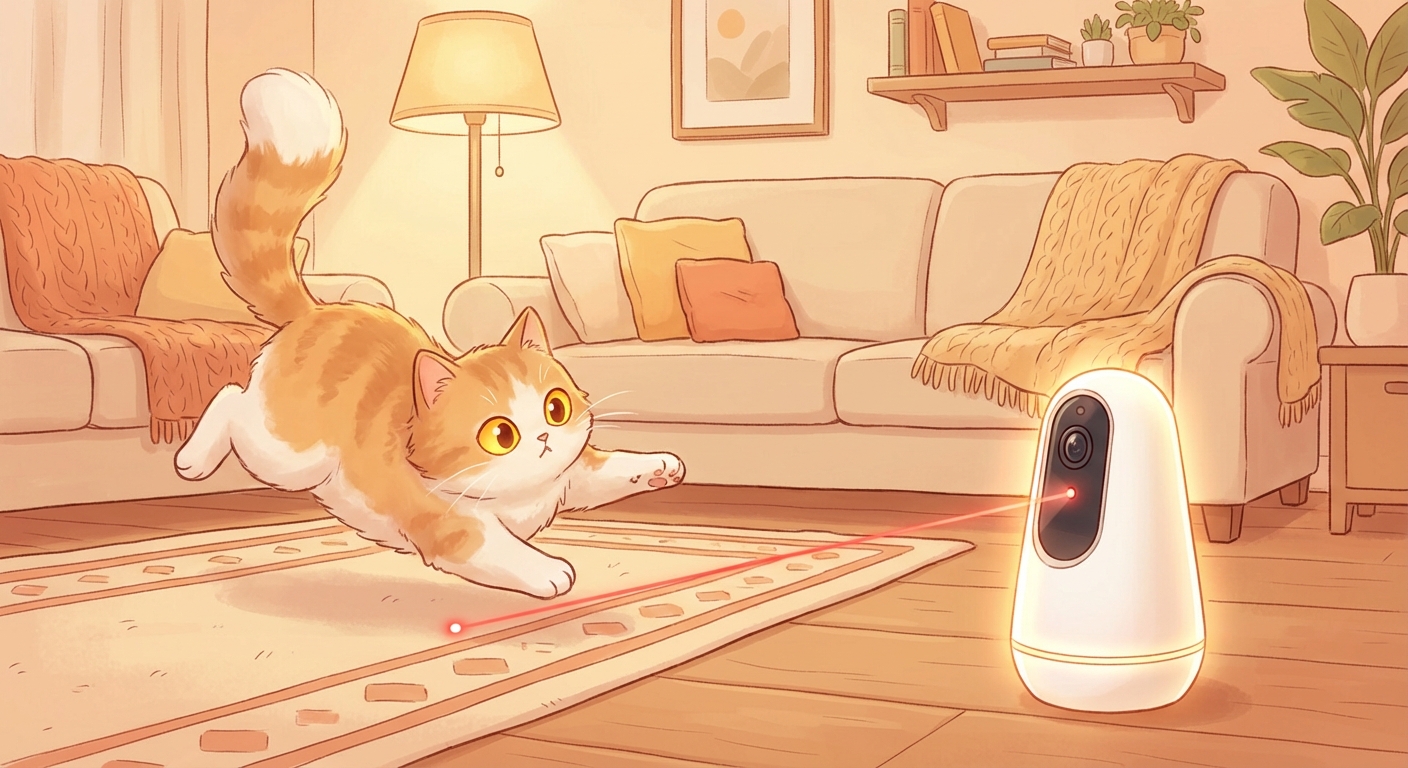
For cats: Interactive laser toys on timers, motorized prey-simulation toys, and puzzle feeders designed for cats can all help redirect anxious energy. Cats tend to engage in shorter, more intense play sessions, so rotating toys to maintain novelty is important.
The timing trick: Give puzzle toys and special treats only when you leave, and pick them up when you return. This creates a positive association with your departure rather than a negative one.
Environmental Calming Strategies
Sometimes the simplest solutions are the most effective. Adjusting your pet's environment can significantly reduce anxiety even without any technology.
Sound: Leaving on background noise, whether it is music, a podcast, or a white noise machine, can mask triggering sounds like door slams or car horns that spike anxiety. Studies have shown that classical music and reggae tend to have the most calming effect on dogs. For cats, music composed at frequencies they find soothing has shown promise in veterinary waiting room studies.
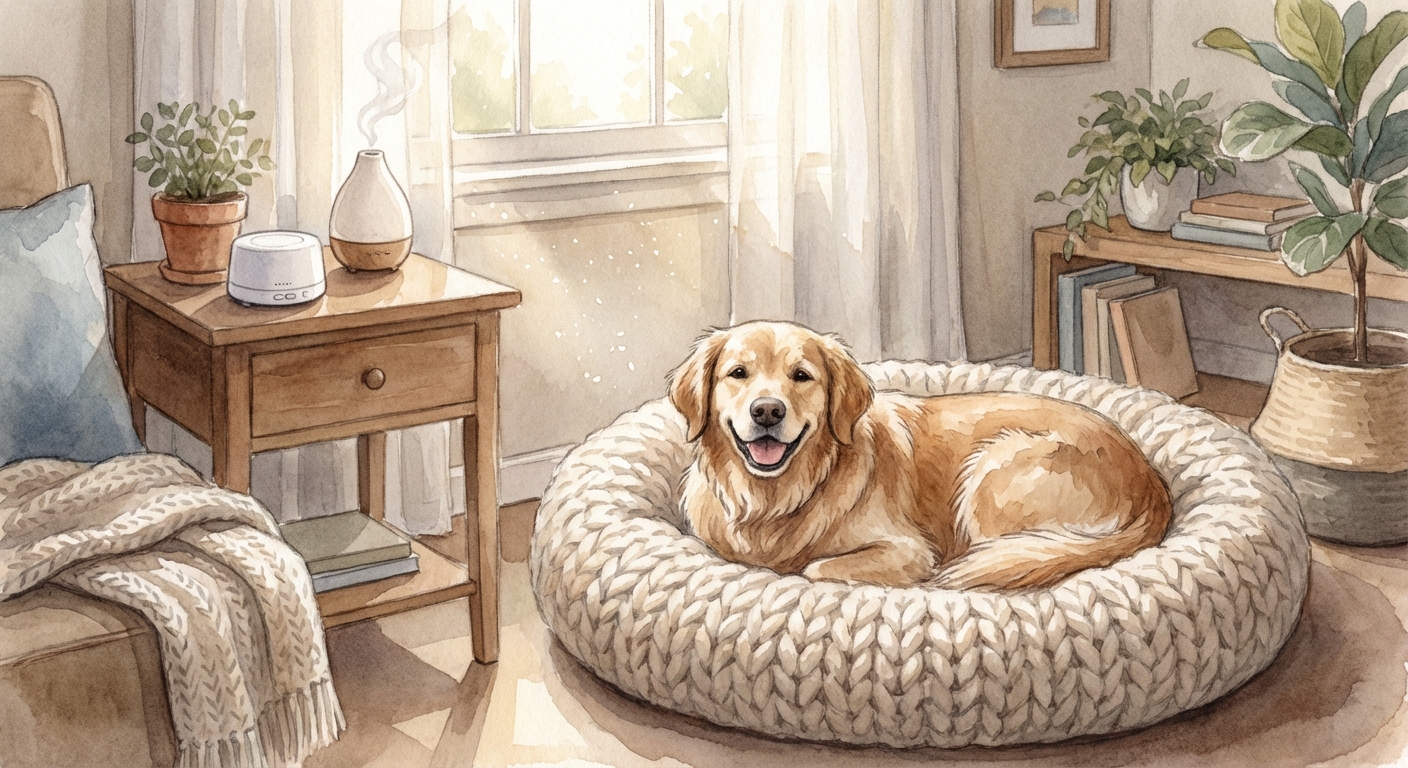
Scent: Pheromone diffusers release synthetic versions of calming pheromones that mimic the ones mother dogs and cats produce. While the evidence is mixed, many pet owners report noticeable improvements, particularly when combined with other strategies. Lavender-based calming sprays are another option, though they should be used sparingly around cats, who are more sensitive to essential oils.
Safe spaces: Giving your pet a designated comfort zone, whether it is a crate with a comfortable bed (for dogs who are crate-trained and find it comforting), a cat tree near a window, or a quiet room with their favorite blanket, provides a sense of security.
Building a Departure Routine That Reduces Stress
How you leave the house matters more than most people realize. Dramatic goodbyes, lots of petting and apologetic tones, actually signal to your pet that something stressful is about to happen.
Keep departures boring. Pick up your keys and bag without fanfare. Do not make eye contact or give lengthy goodbyes. The goal is to make leaving feel like a non-event.
Practice short absences. If your pet reacts the moment you leave, start with departures measured in seconds, not hours. Step outside the door, wait 10 seconds, come back in without making a fuss. Gradually increase the duration as your pet learns that you always come back.
Desensitize departure cues. If your pet starts getting anxious the moment you pick up your keys, start picking up your keys randomly throughout the day without leaving. This breaks the association between the cue and the stressful event.
Exercise before you go. A well-exercised pet is a calmer pet. A solid walk or play session before you leave for the day can significantly reduce anxiety levels during the first few hours of your absence.
When to Seek Professional Help
Smart tech and behavioral strategies work well for mild to moderate separation anxiety. But if your pet is injuring themselves trying to escape, refusing to eat when alone, or showing no improvement after several weeks of consistent training, it is time to consult a veterinary behaviorist.
Severe separation anxiety sometimes requires a combined approach including professional behavior modification, environmental changes, and in some cases, short-term medication to reduce the baseline anxiety level enough for training to take hold.
The most important thing is not to punish your pet for anxious behavior. They are not being spiteful or disobedient. They are genuinely distressed, and punishment will only make the anxiety worse.
Putting It All Together
The best approach to separation anxiety combines multiple strategies rather than relying on any single solution. A morning exercise session, a puzzle feeder given at departure, background music, and a pheromone diffuser in their safe space creates layers of support that address the problem from multiple angles.
Smart pet technology in 2026 gives you more visibility and more tools than ever, but the foundation is still patience, consistency, and understanding what your individual pet needs. Start small, track what works, and adjust as you go.