Foldables Have Crossed the Threshold
A few years ago, foldable phones felt like expensive experiments. The screens creased visibly, the hinges felt fragile, and the software often struggled to keep up with the hardware. Early adopters paid a premium for technology that was impressive in concept but frustrating in daily use.
That chapter is over. In 2026, foldable display technology has matured to the point where these devices are genuine contenders for your next upgrade — not because they are novel, but because they solve real problems that traditional form factors cannot.
The Current State of Foldable Technology
Foldable screens rely on ultra-thin glass or advanced polymer layers that can bend repeatedly without cracking. The engineering challenge has always been creating a display that is both flexible enough to fold and durable enough to withstand tens of thousands of open-and-close cycles.
In 2026, the technology has made meaningful progress on several fronts:
Crease visibility is dramatically reduced. Earlier foldable devices had an obvious crease along the fold line that you could both see and feel. Current generation displays use improved hinge mechanisms and screen materials that minimize this to the point where it is barely noticeable during normal use. It has not disappeared entirely, but it is no longer a distraction.
Durability has improved significantly. Modern foldable hinges are rated for hundreds of thousands of folds. The screens themselves are more resistant to scratches and pressure than earlier generations. Water and dust resistance, once a weakness of foldable designs due to the hinge gap, has reached parity with traditional devices in many current models.
Software optimization has caught up. Operating systems and apps now handle the transition between folded and unfolded states smoothly. Content reflows naturally, multi-window functionality works reliably, and developers increasingly design with foldable layouts in mind.
The Three Main Form Factors
Not all foldables are the same. The market has settled into three distinct categories, each serving different needs:
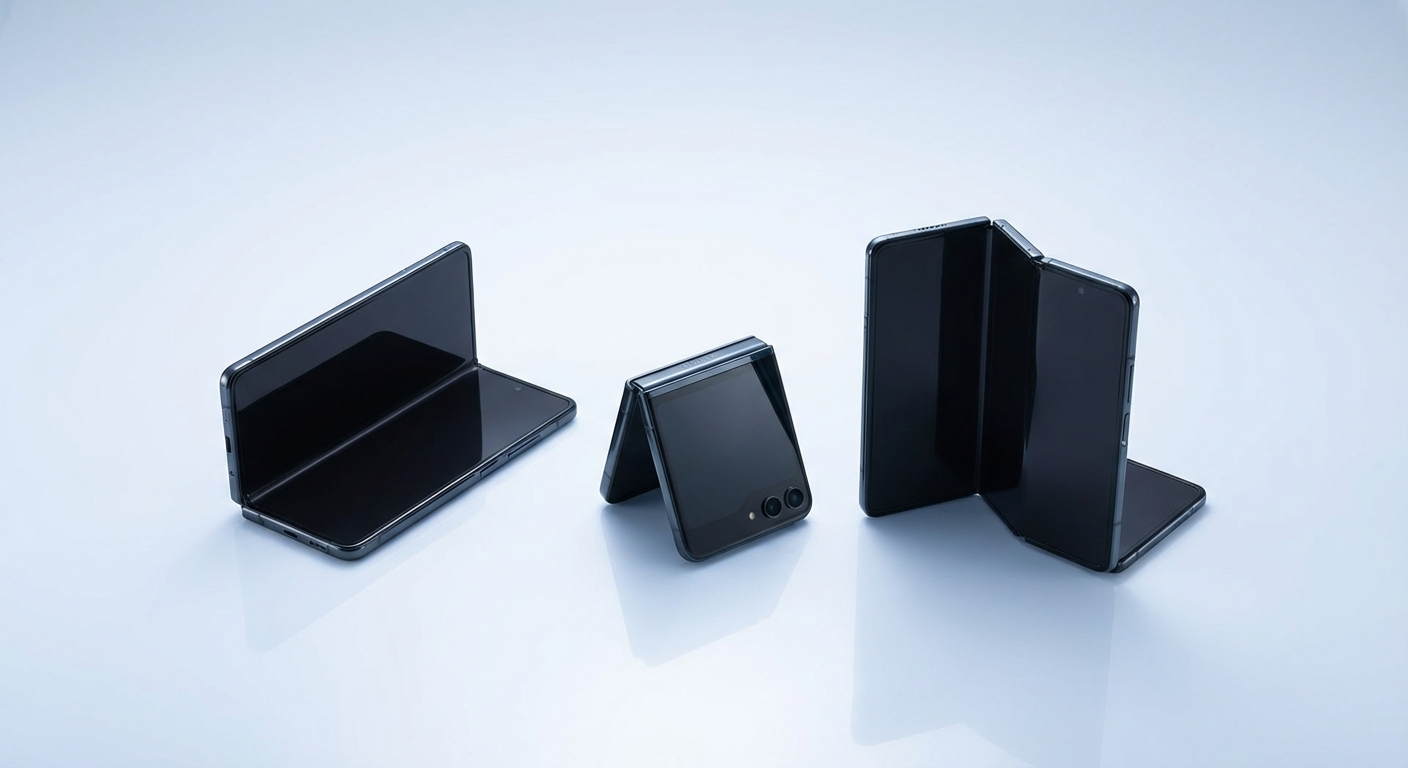
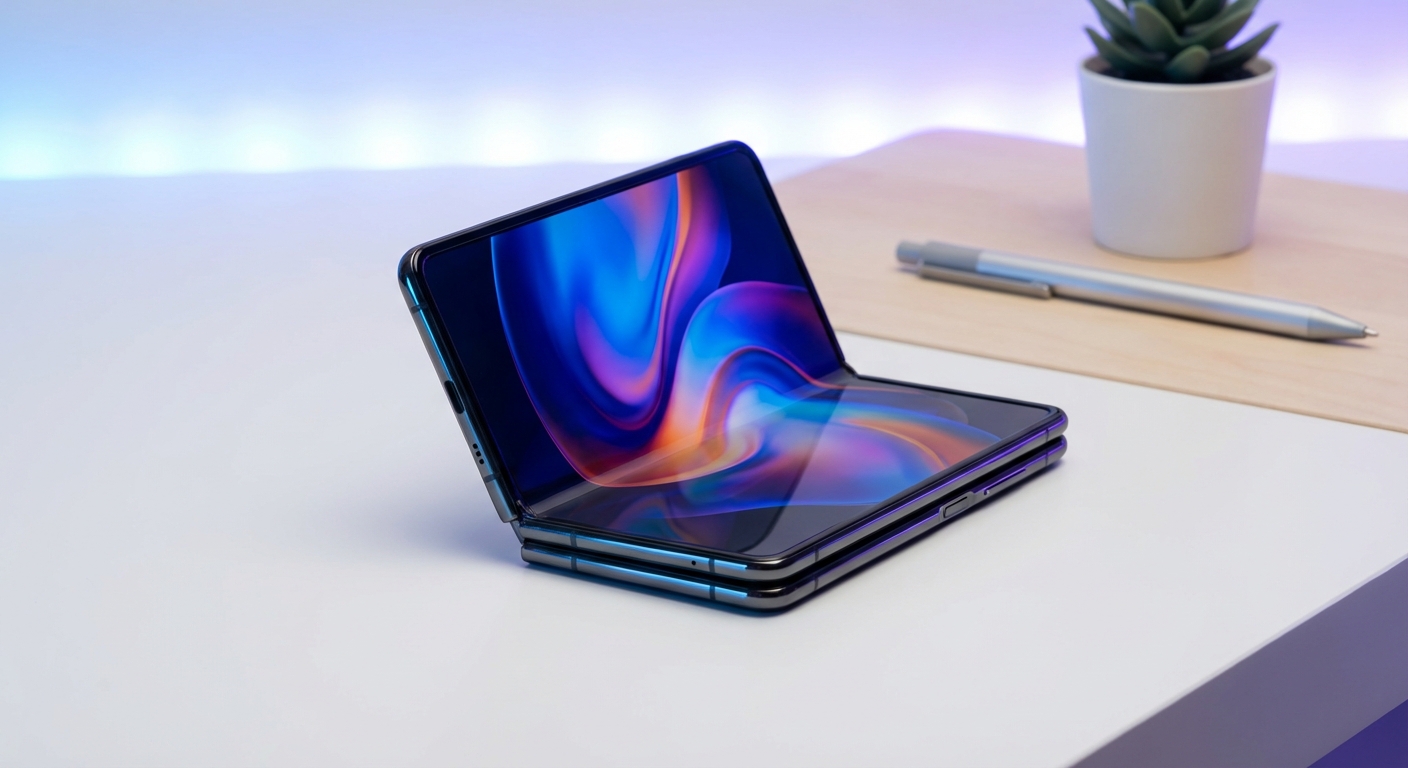
Book-fold devices open like a book to reveal a tablet-sized screen. When closed, they function as a standard-sized phone with an external cover display. This is the most popular form factor because it solves a genuine compromise: you get the pocketability of a phone and the screen real estate of a tablet in one device.
The appeal is straightforward. Reading articles, watching videos, editing documents, and multitasking are dramatically better on a larger screen. But carrying a separate tablet is impractical for most people. A book-fold device eliminates that trade-off.
Flip-fold devices fold in half vertically, turning a full-sized phone screen into a compact, pocket-friendly package. When closed, a small external display handles notifications, quick replies, and basic controls.
Flip-folds appeal to people who want a full-sized phone experience but value compactness. They slip easily into small pockets and clutch bags. The trade-off is that you do not gain extra screen space — you gain portability.
Tri-fold devices are the newest and most ambitious form factor. These fold twice to create three screen panels that unfold into a near-tablet-sized display. When fully closed, they approximate a thick phone. When fully open, they offer the largest usable screen of any pocket device.
Tri-folds are still relatively new and come with trade-offs in thickness and weight. But they represent the most dramatic rethinking of what a mobile device can be.
Who Actually Benefits From a Foldable?
Foldable technology is not for everyone, and that is fine. Here is where it genuinely shines:
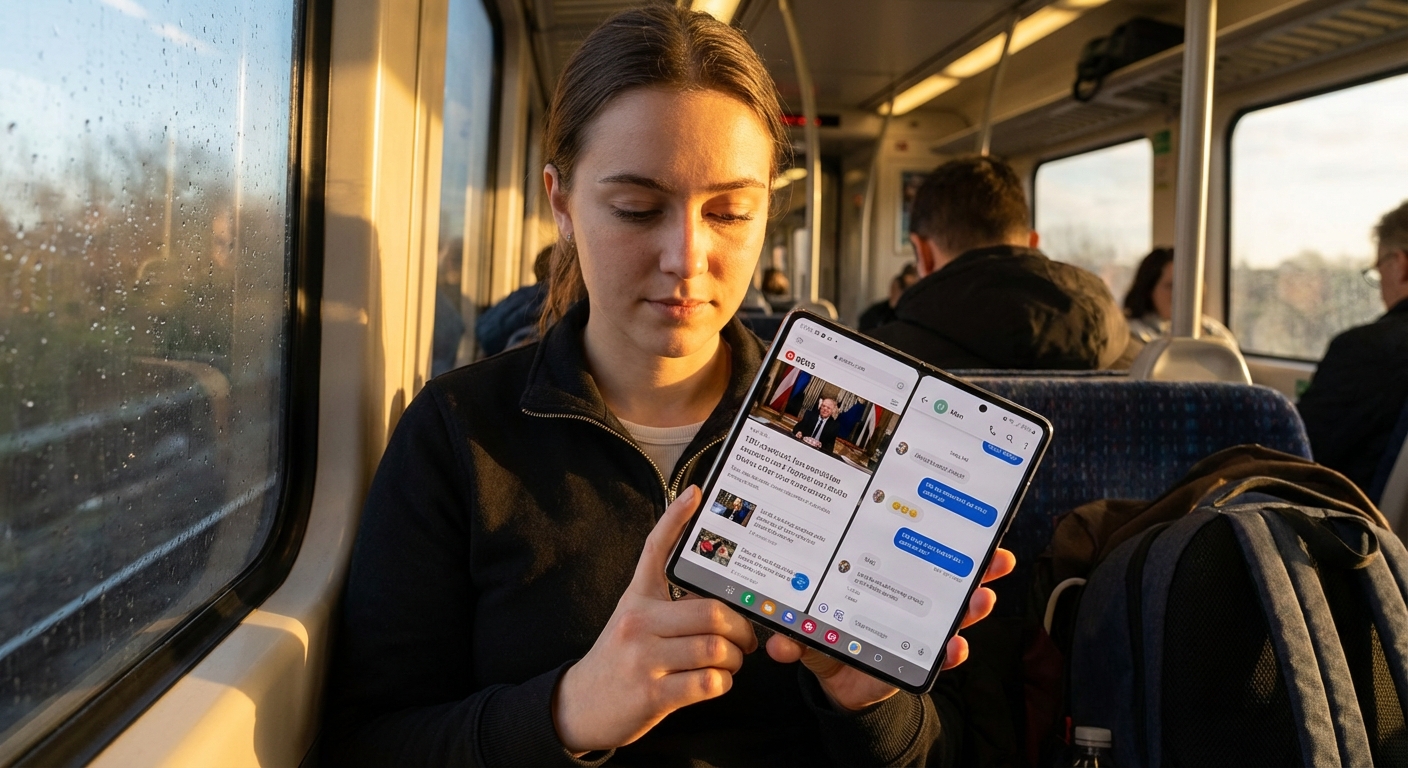
Multitaskers benefit enormously from book-fold devices. Running two apps side by side — a video call and a document, a messaging app and a browser, a map and a travel itinerary — is far more practical on a larger screen. If you regularly wish your phone screen were bigger, a foldable directly addresses that.
Content consumers get a dramatically better experience. Reading, watching videos, browsing photos, and scrolling social media on a tablet-sized screen is simply more immersive. If your phone is your primary content device and you do not want to carry a tablet, a book-fold is a compelling option.
Creative professionals benefit from the extra screen space for tasks like photo editing, sketching, and reviewing documents. The larger canvas makes precision work more practical on the go.
Commuters and travelers who want to minimize the number of devices they carry find foldables appealing as a combined phone and tablet. One device that handles calls, messaging, reading, and productivity reduces bag space and charging cables.
What to Consider Before Buying
If a foldable is on your radar, here are the factors that matter most:
Weight and thickness. Foldable devices are heavier and thicker than traditional phones when closed. A book-fold typically weighs 20 to 30 percent more than a comparable standard phone. For most people this is manageable, but if weight in the pocket is a priority, handle one in person before committing.
Screen protector limitations. Foldable displays use softer screen materials than traditional glass-front phones. Most come with a pre-applied screen protector that should not be removed. This protector is more susceptible to fingernail impressions and scratches than standard screen glass. It is a trade-off of the technology that is improving but has not been fully solved.
App compatibility. While most major apps now support foldable layouts, some smaller or older apps may not take full advantage of the larger screen. They will still work, but they might display with black bars or not optimize their layout for the additional space.
Battery life trade-offs. Larger screens consume more power. Book-fold devices typically offer competitive battery life when used in folded mode, but extended use of the large inner screen will drain the battery faster than a standard phone. Improvements in battery capacity and display efficiency have closed this gap significantly, but it remains a consideration for heavy users.
Price. Foldable devices still carry a premium over traditional phones, though the gap has narrowed. Expect to pay more, but also expect to get a device that functionally replaces two form factors.
The Durability Question
The most common hesitation about foldable devices is still durability. Will the hinge break? Will the screen crack along the fold? These were legitimate concerns with early devices, and the skepticism is understandable.
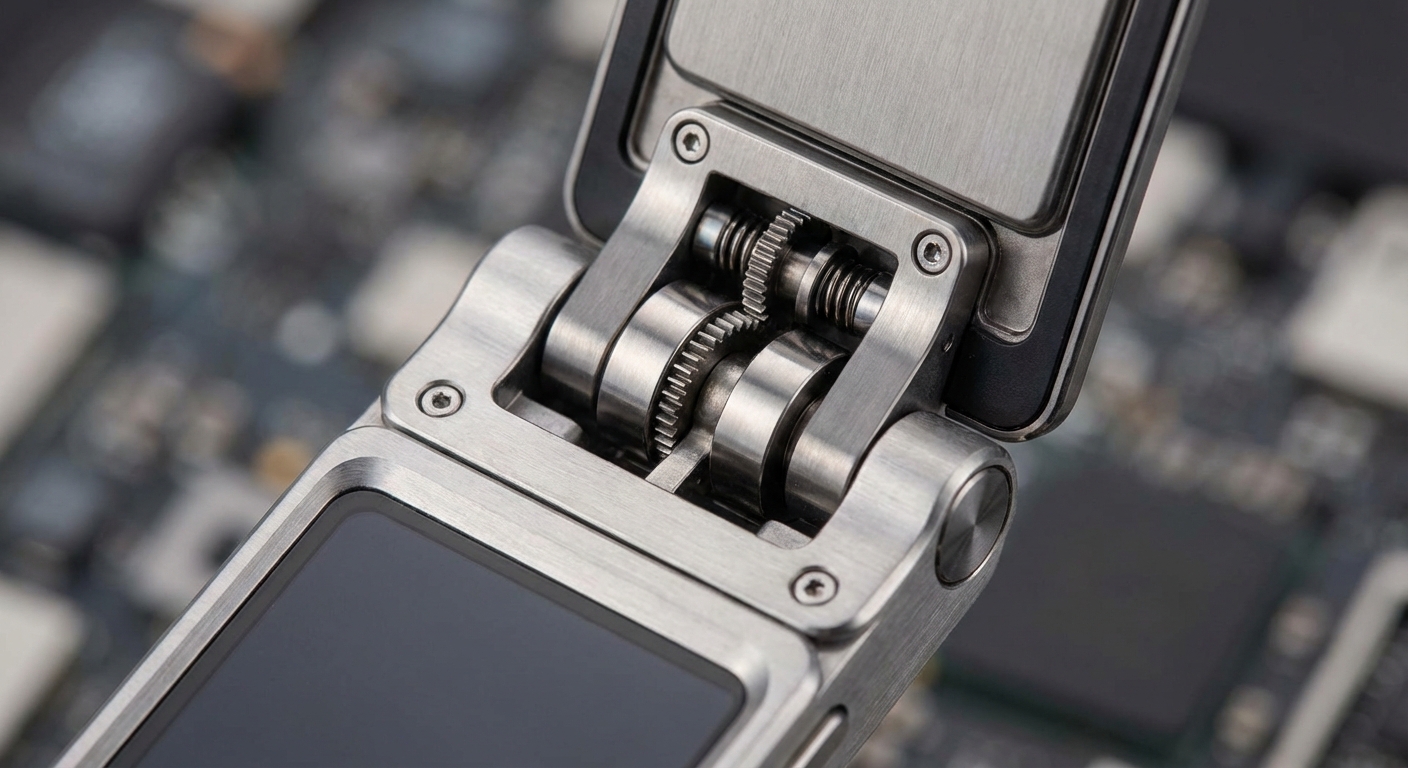
The honest answer in 2026 is that foldable durability has reached a level where most users will never encounter a fold-related failure during normal use. Hinge mechanisms are tested to last well beyond a typical upgrade cycle. Screens are far more resilient than first-generation models.
That said, foldable screens are still inherently softer than the hardened glass on traditional phones. They require a bit more care — keeping the screen clean, avoiding heavy pressure on the fold, and being mindful of sand or grit near the hinge. If you are very rough on your devices, a traditional phone with a tempered glass front remains more forgiving.
Looking Ahead
Foldable technology is not standing still. Rollable displays — screens that extend by unrolling from a compact housing — are in advanced development and could offer a creaseless alternative in the coming years. Flexible screen materials continue to improve in hardness and clarity. And as manufacturing scales up, prices will continue to come down.
The question is no longer whether foldable screens work. They do. The question is whether the specific trade-offs — a bit more weight, a bit more care required, a higher price — are worth the genuine benefits of having a larger, more versatile display that still fits in your pocket.
For a growing number of people in 2026, the answer is yes.